
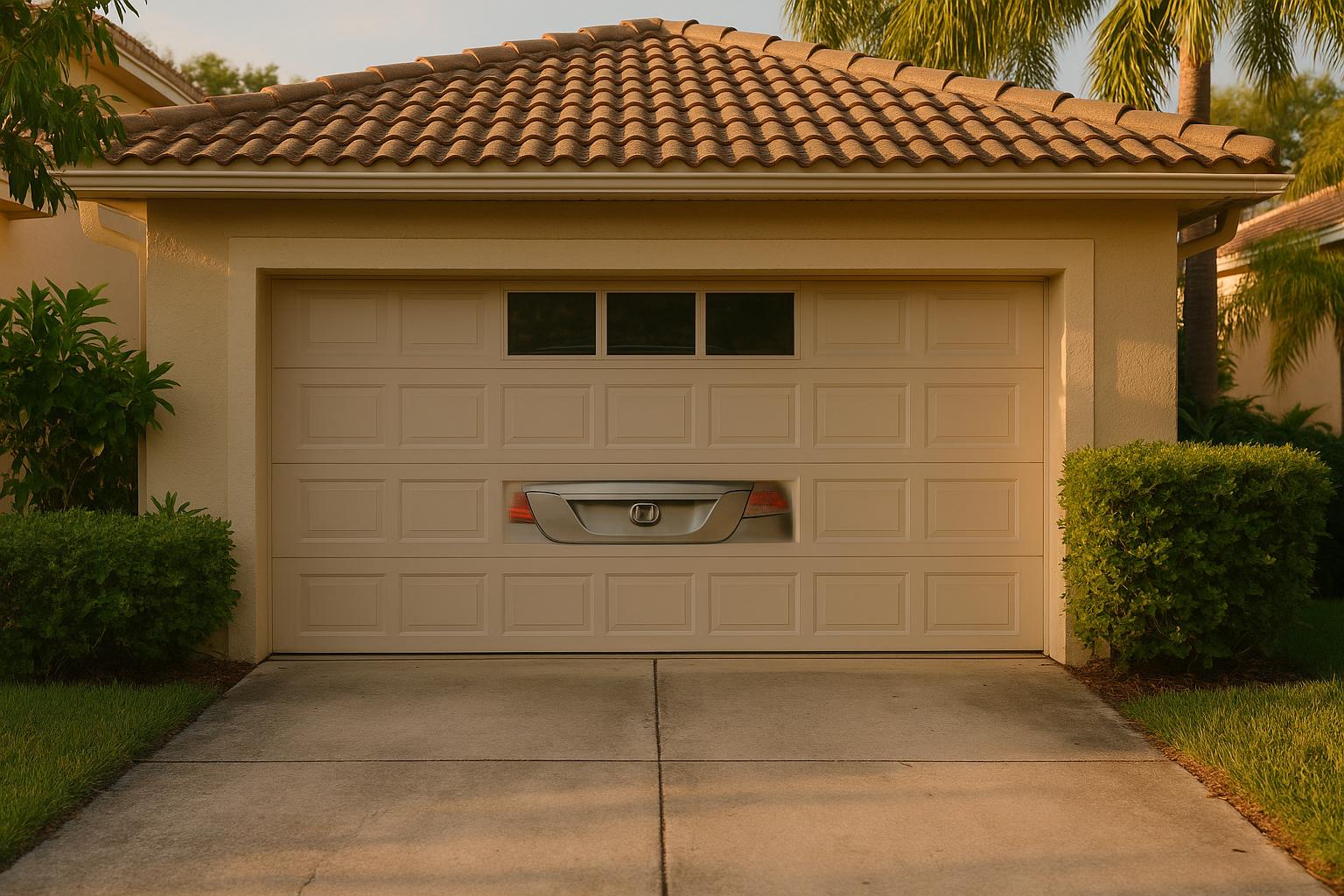
Stuck in Your Garage? Here's What's Going On
It's early morning, you're running on schedule for once, and you hit the button to open your garage door. Nothing happens. Or maybe it groans, moves an inch, and stops. Few things are more frustrating than a garage door that won't cooperate when you need to get out of the driveway.
This is one of the most common calls we get at Homosassa Garage Door Co, especially from homeowners who had a perfectly working door the night before. The good news is that most causes are identifiable and fixable. The key is knowing what to check before you panic and what requires a professional.
Check the Obvious First
Before assuming the worst, run through a few quick checks that solve the problem more often than you'd think.
Dead Remote Batteries
It sounds almost too simple, but dead batteries in your garage door remote are one of the top reasons people think their door is broken. Try pressing the wall-mounted button inside your garage. If the door opens from the wall switch but not the remote, swap out the batteries and you're back in business.
The Door Is Locked
Many garage doors have a manual lock feature, often a slide bolt or a lock bar controlled by a handle on the inside of the door. If someone in the household accidentally engaged it, the opener will strain against the lock and fail to move the door. Check for a locked position and release it.
The Opener Is Unplugged
Power outages during the night, tripped breakers, or an accidentally unplugged unit can leave your opener without power. Check that the opener is plugged in and that the circuit breaker hasn't tripped. Here in Homosassa, summer storms can knock out power overnight without you even realizing it.
Common Mechanical Causes
If the basics check out and your door still won't budge, the issue is likely mechanical. Here are the most frequent culprits.
Broken Torsion or Extension Springs
Your garage door springs do the heavy lifting — literally. They counterbalance the weight of the door so the opener doesn't have to muscle it up on its own. When a spring breaks, the opener usually can't generate enough force to raise the door, or it may lift a few inches and stop.
You can often spot a broken torsion spring by looking at the bar above your door. If you see a visible gap in the coil, that's your answer. Do not attempt to replace garage door springs yourself. They're under extreme tension and can cause serious injury. This is a job for a trained technician.
Snapped or Frayed Cables
The cables on either side of your garage door work in tandem with the springs. If a cable snaps or comes off the drum, the door can hang unevenly or refuse to move at all. You might notice the door sitting crooked in the opening. Like springs, cable repair is dangerous and should be handled by a professional.
Misaligned or Obstructed Tracks
Garage door tracks guide the rollers as the door moves up and down. Over time, tracks can shift, develop bends, or accumulate debris. In the humid Homosassa climate, rust and corrosion can also cause rollers to seize up. Inspect the tracks visually for obvious bends, gaps between the track and the wall, or objects blocking the path.
Opener and Sensor Issues
If the door itself seems mechanically sound but the opener isn't doing its job, the problem may be electronic.
Photo-Eye Sensor Misalignment
The safety sensors near the bottom of your garage door tracks send an invisible beam across the opening. If something blocks or misaligns them, the door may refuse to close — but in some cases, sensor issues can also prevent the door from operating at all, especially with newer smart openers. Make sure both sensor lights are lit and that nothing is blocking the beam. Wipe the lenses clean, as dust, cobwebs, and moisture can interfere with the signal.
Stripped Gears in the Opener
If you hear the motor running but the door doesn't move, the internal gears in your opener may be stripped. This is common in older chain-drive and belt-drive openers that have been working hard for years. The motor spins, but the drive mechanism can't transfer that motion to the door. A technician can replace the gear assembly, which is usually more cost-effective than replacing the entire opener.
Logic Board Failure
The circuit board inside your opener controls everything from remote signals to safety features. Power surges — common during Florida's storm season — can fry these boards. If your opener shows no lights, doesn't respond to any input, and you've confirmed it has power, the logic board may need replacement.
How to Get Your Car Out Right Now
If you're stuck and need to leave, most garage doors have a manual release. Look for a red handle hanging from a cord near the top of the door on the opener rail. Pulling this cord disengages the opener so you can lift the door manually.
A few important notes:
- Only use the manual release when the door is fully closed. If a spring is broken and the door is partially open, releasing it could cause the door to slam down.
- Lift the door straight up with both hands, bending at the knees.
- If the door feels extremely heavy, a spring is likely broken. Do not force it.
- Once you've driven out, pull the door back down and lock it manually if possible until repairs are made.
When to Call a Professional
Some garage door problems are safe to troubleshoot on your own — swapping remote batteries, clearing sensor obstructions, or resetting a tripped breaker. But anything involving springs, cables, track realignment, or internal opener components should be left to experienced technicians.
Attempting DIY repairs on high-tension components puts you at risk of serious injury and can cause further damage to the door system. A professional can also identify underlying issues you might miss, like worn rollers or a door that's slowly going out of balance.
Preventing Morning Surprises
The best way to avoid getting stuck in your garage is to stay ahead of problems with regular maintenance. A professional tune-up once or twice a year can catch worn springs, fraying cables, and failing opener components before they leave you stranded.
During a maintenance visit, a technician will typically:
- Inspect and lubricate all moving parts
- Test the balance of the door
- Check spring tension and cable condition
- Tighten hardware and inspect tracks
- Test safety sensors and auto-reverse function
- Evaluate the opener's performance
Living in the Homosassa area means your garage door deals with heat, humidity, salt air, and storm-related power surges year-round. These conditions accelerate wear on every component, making regular maintenance even more important.
Need Help Getting Unstuck?
If your garage door won't open and you've exhausted the simple fixes, Homosassa Garage Door Co is here to help. We serve homeowners throughout Homosassa, Crystal River, Inverness, Lecanto, Beverly Hills, and Citrus Springs with fast, reliable repair service. We'll diagnose the problem, explain your options, and get your door working again so you can get on with your day.