
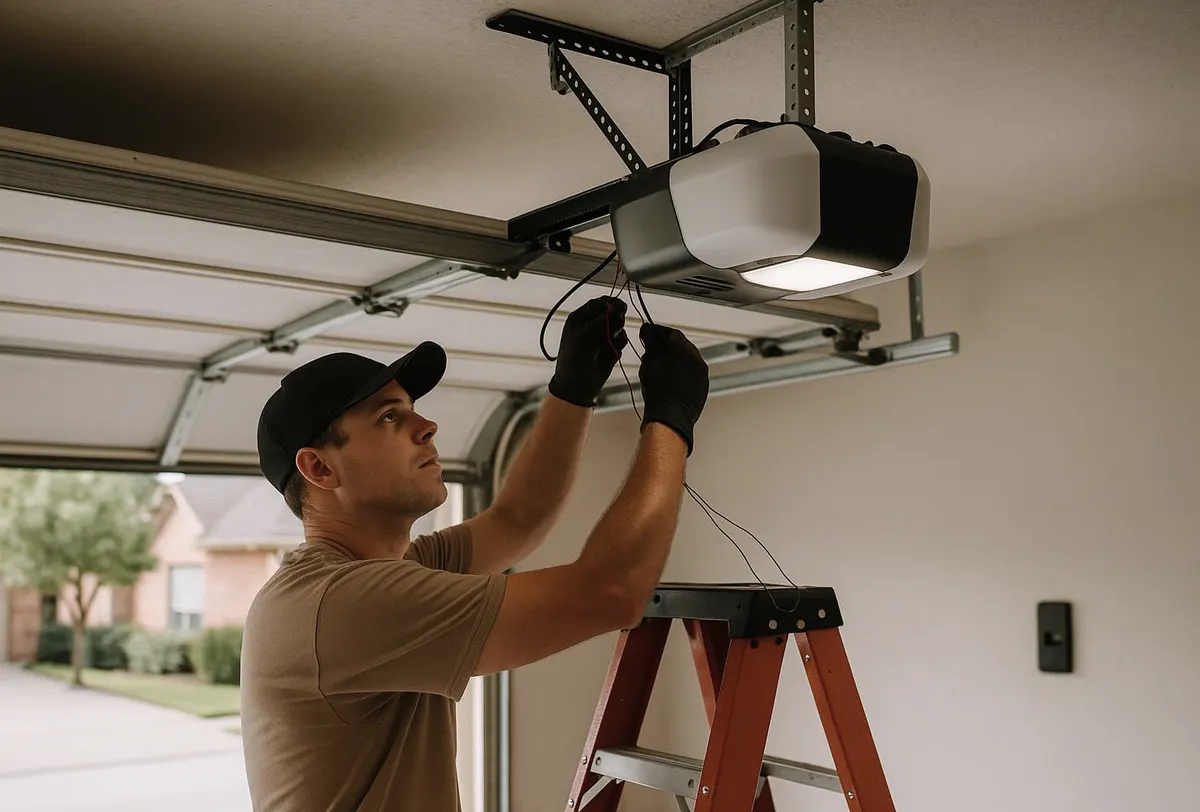
Storm Season Isn't Over: Is Your Garage Door Ready for the Next One?
Rule of thumb: if your garage door isn't rated for wind load, it's the weakest point in your home's envelope, full stop. The exceptions are narrow — a newer home built to current wind-load codes with a factory-rated door and properly installed bracing, or a detached garage that isn't structurally tied to the living space. For everyone else, especially anyone in an older home on the Nature Coast, the garage door deserves the same attention as your roof and windows heading into the back half of hurricane season.
Why the Garage Door Is the Weakest Wall
Most exterior walls are solid, braced, and tied into the frame of the house. A garage door is a large moving panel held in place by tracks, rollers, and a spring system that was never designed to resist a sustained sideways push. When wind hits a closed garage door directly, it can flex the panels, pop rollers out of the track, or bow the door enough to separate it from the track altogether.
Here's the part that catches people off guard: once a garage door fails and wind gets inside, it doesn't just damage the garage. Wind pushing through an open garage door pressurizes the whole house from the inside, putting extra load on the roof structure. That's why wind engineers treat an unprotected garage door as a direct threat to the roofline, not just a garage problem.
What an Actual Wind-Rated Setup Looks Like
Not all doors — and not all installations — hold up the same way. A few things separate a door that can take a real blow from one that can't:
- Horizontal or vertical bracing installed on the inside of the panels, rated for the door's size and your area's wind exposure.
- Reinforced track anchored with enough fasteners, into solid framing, not just drywall or thin trim.
- Heavier-gauge steel panels instead of thin residential-grade steel that dents and flexes under pressure.
- A wind-rated opener connection or supplemental struts, since a standard opener arm isn't built to hold a door shut against sustained wind pressure.
If you don't know whether your current door and track meet any of this, that's worth finding out before the next storm, not during one.
Pre-Storm Checklist for the Next 48 Hours
When a storm is actually bearing down, you won't have time for anything complicated. Do this well ahead of the season's next system:
- Inspect the track and rollers. Look for rust, bent sections, or rollers that are chipped or loose — all common after a humid summer. A compromised roller is far more likely to pop loose under wind pressure.
- Check the panels for rust and swelling. Moisture gets into seams and fasteners, especially on doors facing prevailing wind and salt air. Swollen or rusted panels lose structural integrity exactly where you need it.
- Test the opener's force settings. An opener straining to lift a door that's gotten heavier from swelling or rust isn't just an inconvenience — it's a sign the whole system is already compromised before wind ever enters the picture.
- Add or inspect bracing. If you have a bracing kit, make sure it's actually installed correctly and the hardware isn't rusted through. If you don't have one, this is the single highest-value upgrade for storm resistance.
- Clear the tracks of debris. Afternoon downpours wash dirt, leaves, and grit into the track, which can bind the door or throw it off alignment right when you need it to seal tight.
Signs Your Door Won't Hold Up
Some doors are quietly storm-ready; others are one bad afternoon from trouble. Watch for:
- A door that sags visibly when open, or that doesn't sit flush against the weatherstripping when closed.
- Tracks that have separated slightly from the wall or show bent sections from past wear.
- Rust forming at the base of panels or around hinges — common in coastal-facing garages where salt air speeds up corrosion.
- An opener that struggles, reverses unexpectedly, or runs louder than it used to, which often means the door itself is heavier or less balanced than it should be.
- Panels that feel soft or flex noticeably when you push on them by hand.
Any one of these on its own might be a minor repair. Together, they're a sign the door isn't going to perform well under wind load.
After the Storm Passes
Even if the door holds, give it a once-over afterward. Heavy rain and wind can knock rollers slightly out of track, loosen bracket screws, or drive water into areas that normally stay dry. A door that operated fine before the storm can develop a slow leak, a new rattle, or uneven movement afterward — problems that are much cheaper to fix now than after a second or third storm works on the same weak spot.
When to Call Homosassa Garage Door Co
If your inspection turns up rust, sagging, a door that's heavier than it used to be, or you're simply not sure your setup meets current wind-load expectations, that's our call. We handle garage door maintenance to catch the small issues — worn rollers, loose track, early rust — before they become storm-season failures, and we handle full garage door installation for homeowners who want a door and bracing system actually built for what this coast throws at it. We also service commercial doors for the businesses around Homosassa that have the same exposure on a bigger scale.
If you're not sure where your door stands going into the rest of storm season, now's the time to find out — not during the next watch. Call Homosassa Garage Door Co for a storm-readiness check anywhere in Homosassa, Crystal River, Inverness, Lecanto, Beverly Hills, Citrus Springs, Hernando, or Sugarmill Woods.