
Your Garage Door Springs Are Under More Stress Than You Think
Every time your garage door opens and closes, the springs do the heavy lifting — literally. A standard two-car garage door can weigh between 150 and 250 pounds, and the springs are responsible for counterbalancing all of that weight. Over time, the metal fatigues, and eventually, the springs will fail.
For homeowners in Homosassa and the surrounding Nature Coast area, our humid subtropical climate adds another layer of stress. Moisture in the air accelerates rust and corrosion on metal components, which can shorten the lifespan of your garage door springs even further.
The good news is that springs rarely break without warning. If you know what to look for, you can catch the problem early and schedule a replacement before you're stuck with a garage door that won't open — or worse, one that comes crashing down.
How Long Do Garage Door Springs Last?
Most standard garage door springs are rated for approximately 10,000 cycles. One cycle equals one full open and one full close. If you use your garage door twice a day, that works out to roughly seven to nine years. If your household uses the garage door four or more times a day, you could be looking at replacement in as few as four to five years.
High-cycle springs are available and can last 20,000 to 50,000 cycles, but they cost more upfront. If you're replacing springs and plan to stay in your Homosassa home for the long haul, upgrading to high-cycle springs can be a smart investment.
7 Warning Signs Your Springs Are Failing
1. The Door Feels Heavier Than Usual
Try this simple test: disconnect your garage door opener by pulling the emergency release cord, then manually lift the door about halfway. A properly balanced door should stay in place on its own. If it feels unusually heavy or slides back down, your springs are losing tension and may be close to failure.
2. The Door Opens Unevenly or Crooked
If one side of your garage door rises faster than the other, it often means one spring has weakened more than its counterpart. This uneven movement puts extra strain on the opener, the tracks, and the remaining spring, which can lead to a cascade of problems if left unaddressed.
3. You Hear Loud Squeaking or Grinding
Some noise during operation is normal, but excessive squeaking, grinding, or popping sounds can indicate that the spring coils are binding or that the metal has developed micro-fractures. Don't ignore new or worsening sounds — they're your door's way of telling you something is wrong.
4. Visible Gaps in the Spring Coils
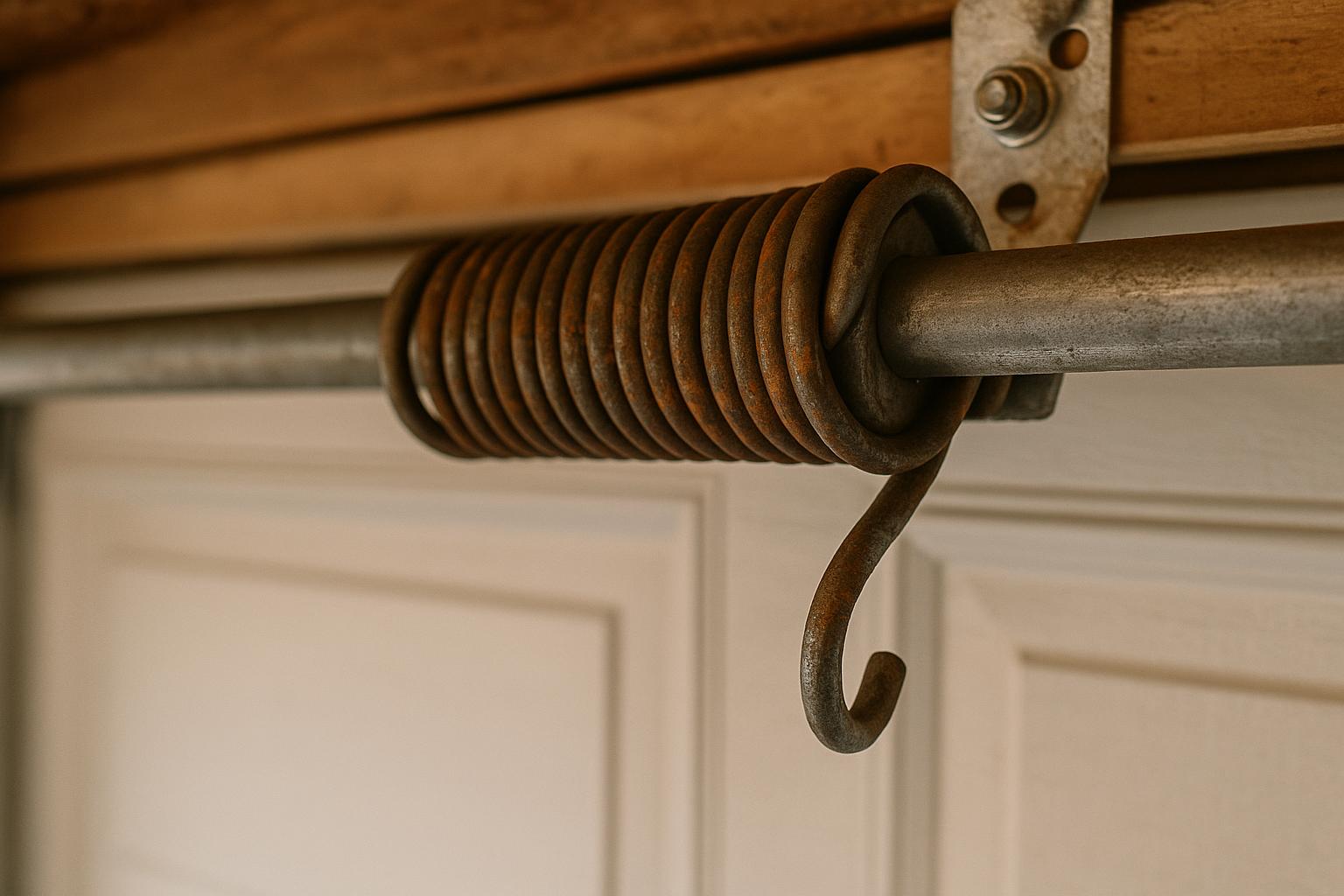
Take a look at your torsion spring, which is the long spring mounted horizontally above the door. A healthy spring has tightly wound coils with no visible gaps. If you notice a gap or separation in the coils, the spring has already partially broken and needs immediate replacement.
5. The Door Slams Shut Quickly
When springs are functioning properly, they control the speed at which your door closes. If your garage door drops faster than normal or slams shut, the springs are no longer providing adequate counterbalance. This is a safety hazard, especially if you have children or pets.
6. Rust and Corrosion on the Springs
Living near the Gulf Coast means dealing with salt air and humidity. If your garage door springs show significant rust or pitting, the corrosion is weakening the metal from the inside out. Regular lubrication can slow this process, but heavily corroded springs should be replaced before they snap unexpectedly.
7. Your Opener Is Straining
Is your garage door opener working harder than it used to? Does it sound louder, move slower, or occasionally fail to fully open the door? When springs weaken, the opener has to compensate for the lost counterbalance. This extra strain can burn out your opener motor prematurely, turning one repair into two.
Why You Should Never Replace Garage Door Springs Yourself
We understand the DIY spirit — plenty of Homosassa homeowners are handy and capable. But garage door spring replacement is one job that genuinely belongs to trained professionals. Here's why:
- Extreme tension: Torsion springs are wound under tremendous force. A spring that releases unexpectedly can cause serious injury or even death.
- Specialized tools required: Proper spring replacement requires winding bars, clamps, and other tools that most homeowners don't have.
- Precise calibration: Springs must be matched to the exact weight and size of your door. An incorrectly sized or improperly wound spring can damage your door, your opener, or both.
- Warranty concerns: Many garage door and opener warranties are voided if non-professional repairs are performed.
A professional technician can typically complete a spring replacement in under an hour, and the cost is modest compared to the risk of a DIY attempt gone wrong.
What to Do If a Spring Breaks
If you hear a loud bang from your garage — almost like a gunshot — and your door won't open afterward, a spring has likely snapped. Here's what to do:
- Don't try to open the door. Without functioning springs, the full weight of the door is unsupported. Forcing it open with the opener can damage the motor, cables, or tracks.
- Disconnect the opener. Pull the emergency release cord to prevent accidental activation.
- Call a professional. A qualified garage door technician can safely remove the broken spring and install a new one.
At Homosassa Garage Door Co, we keep the most common spring sizes in stock on our service vehicles, which means we can usually complete the repair in a single visit — no waiting days for parts to arrive.
Protect Your Investment With Preventive Maintenance
The best way to avoid a sudden spring failure is regular maintenance. A professional tune-up includes inspecting the springs for wear, lubricating all moving parts, checking the door's balance, and tightening hardware. These small steps can extend the life of your springs and help you catch problems before they become emergencies.
Whether you live in Homosassa, Crystal River, Inverness, Lecanto, Beverly Hills, or Citrus Springs, our team is ready to help you keep your garage door operating safely and smoothly. If you've noticed any of the warning signs above, don't wait for a full break — give us a call and let us take a look before a minor issue becomes a major headache.