
The Mistake Almost Everyone Makes First
When a garage door starts feeling heavy, closing slowly, or reversing for no reason, the first instinct is to grab the opener's settings and crank up the force or adjust the travel limits. It's an easy fix: no tools, no risk, just a few clicks on a dial or a button sequence in the manual. The problem is that it treats the symptom, not the cause. If the door itself is out of balance, turning up the opener's force just means the motor works harder to drag a heavy door through its cycle. You get a few more weeks of normal-looking operation, then a stripped gear, a snapped cable, or a dead motor.
Garage door openers are designed to guide a door that's already balanced by its springs, not to lift the door's actual weight. When the springs are worn, stretched, or simply mismatched to the door's weight, the opener inherits a job it was never built to do. That shows up as grinding noises, a motor that runs hot, a door that slams the last foot instead of settling, or an opener that quits years before it should.
Tools You'll Need
- A step stool, if your door is tall enough that you can't comfortably reach the release handle
- Work gloves
- A helper is useful but not required
- A flashlight for checking the tracks and spring area
How to Test Garage Door Balance
- Close the door fully. Start from the closed position so you have a full range of motion to observe.
- Locate the manual release cord. This is the red-handled rope hanging from the trolley on the track. Pull it straight down and toward the back of the garage. You'll hear a click as the door disengages from the opener.
- Lift the door by hand to about waist height. Go slowly and use your legs, not your back.
- Let go and watch what happens. A balanced door will stay put, or drift down just slightly. That's it. That's the whole test.
- Repeat at the halfway point and near the top. Balance can be off at one position and fine at another, especially on doors with worn torsion springs.
- Reconnect the opener. Pull the release cord again, or push the door until the trolley re-engages, then test with the wall button to confirm normal operation.
What the Results Mean
- Door stays in place or creeps down slowly: balanced. Your opener is doing the job it's supposed to do.
- Door falls quickly when released: springs are too weak for the door's weight, or a cable has stretched. The opener is now straining to lift it every time.
- Door flies upward on its own: springs are over-tensioned, which is its own hazard and still puts uneven load on the opener and tracks.
- Door feels fine at one height and heavy at another: a sign of track misalignment or a spring that's wearing unevenly, which is common after years of humidity swings swelling wood jambs or shifting the frame slightly.
Where the Line Is: Homeowner Job vs. Technician Job
The lift-and-release test itself is safe for a homeowner to run. It takes five minutes and tells you a lot. What comes after the test is where the line is firm.
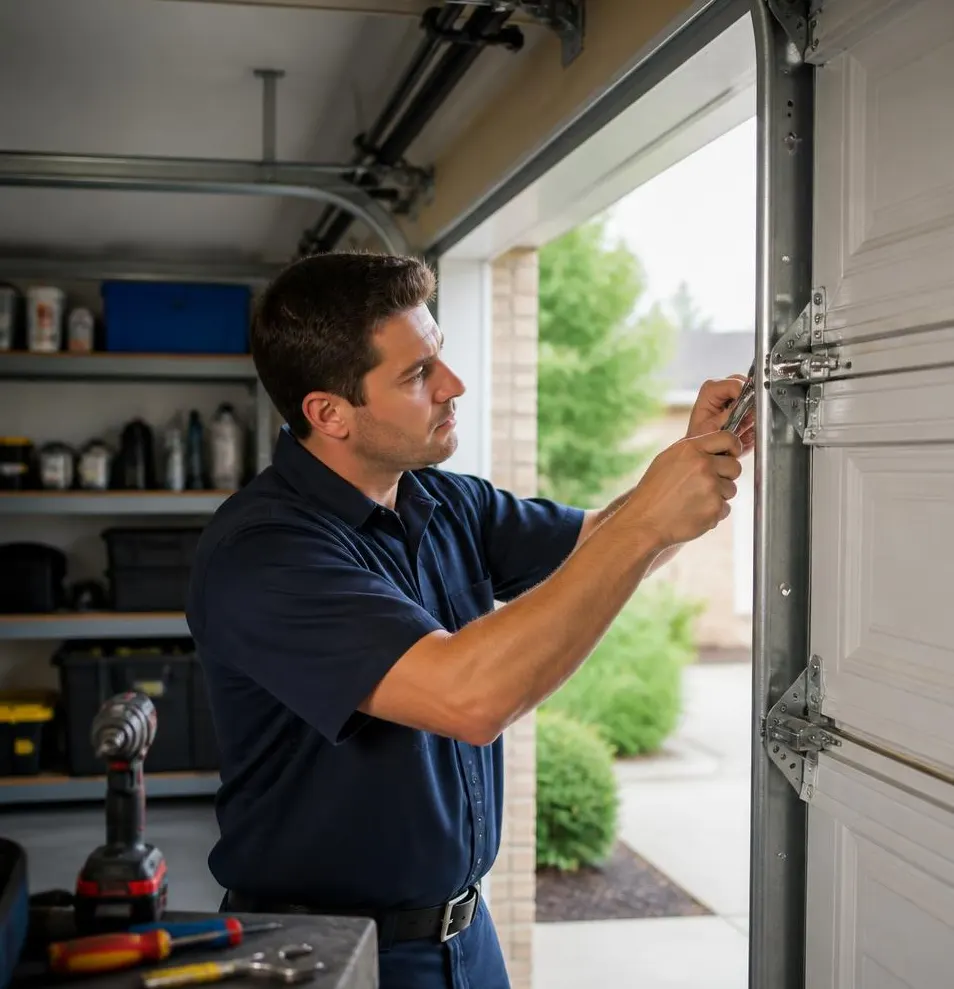
Torsion springs store enormous energy, enough to break bones or crack a windshield if a winding bar slips. Adjusting spring tension, replacing a spring, or re-tensioning cables is technician work, full stop. Likewise, if the balance test reveals a door that's heavy on one side only, that often points to a bent track or a hinge issue that needs hands-on diagnosis rather than a home remedy.
Salt air along the Nature Coast speeds up corrosion on tracks, rollers, and spring coils faster than it would inland, which means a door that tested fine a year ago can develop friction points that mask or mimic a balance problem. If your test results are inconsistent, or the door groans and resists at specific points, that's a call for a professional eye rather than more WD-40 and guesswork.
When to Call Homosassa Garage Door Co
If your balance test shows a door that's too heavy, too light, or inconsistent across its travel, it's time to bring in a technician before hurricane season's wind-load stress adds to the opener's burden. Our Garage Door Spring Repair service re-tensions or replaces worn springs safely, restoring the balance your opener depends on. If the opener itself has already taken damage from months of overwork, our Garage Door Opener Repair & Replacement team can tell you whether it's a repair or a replacement situation, and we'll check the whole system with our standard maintenance visit so you're not back here again next spring.
If you're anywhere from Homosassa to Crystal River, Inverness, Lecanto, Beverly Hills, Citrus Springs, Hernando, or Sugarmill Woods and your garage door failed the balance test, give Homosassa Garage Door Co a call. We'll get it running the way it's supposed to, before your opener pays the price.